


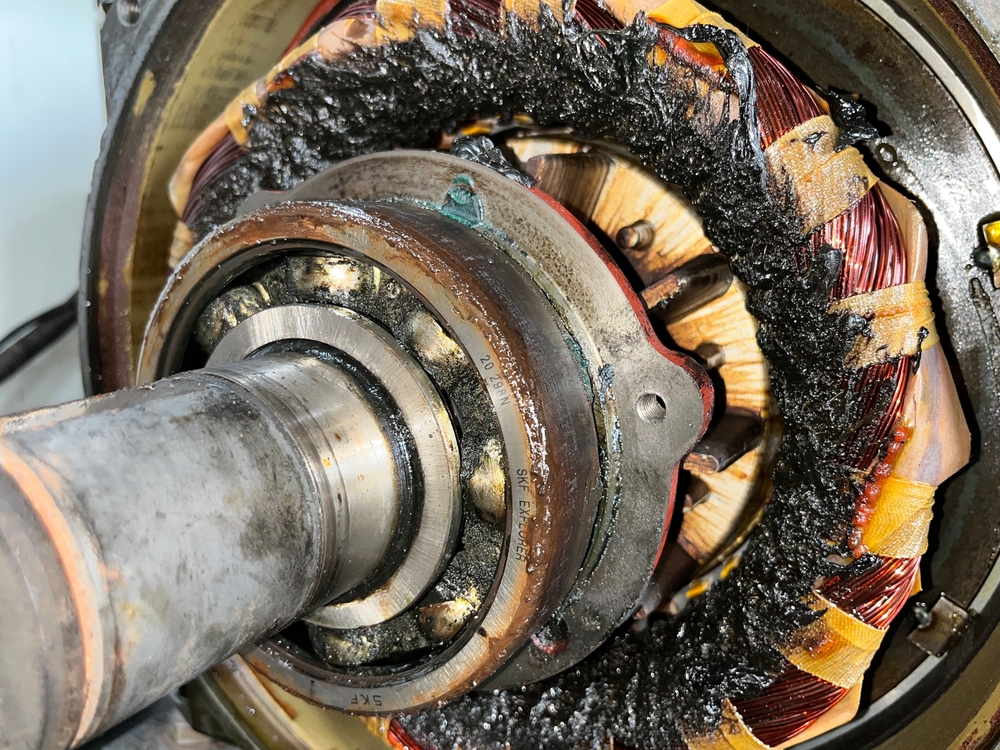
- Manual greasing introduces solid contaminants into bearings, causing premature failure.
- Operators frequently over-lubricate, causing heat and friction, followed by periods of under-lubrication.
- Single-point automatic lubricators provide a constant, precise drip of clean grease, extending bearing life and keeping operators safe.
If your bearings keep failing, the lubrication schedule is probably the last place you are looking. It should be the first. Up to 75% of premature bearing failures are caused by contamination, unsuitable or aged lubricants, or simply applying the wrong quantity of grease.
The common approach is to put bearing lubrication on a calendar-based preventive maintenance (PM) schedule. Once a month, an operator walks the floor with a grease gun, wiping off zerks and pumping grease into every bearing they can reach.
Here is why that fails: every time you open a bearing to manually grease it, you introduce solid contaminants from the plant environment directly into the housing. Worse, manual PMs almost guarantee a cycle of over- and under-lubrication.
The operator pumps too much grease in at once, which blows out the seals and causes excess friction and heat. Then, the bearing slowly dries out over the next few weeks until the next PM cycle.
Here is what actually works: removing the human element and providing a constant, slow drip of perfectly clean grease.
How Single-Point Automatic Lubricators Work
The solution is to use single-point automatic lubrication systems, like the perma STAR Vario. Instead of relying on a grease gun, you install a dedicated, battery-operated drive unit directly onto the bearing (or remote-mount it nearby).
The system consists of an electromechanical drive unit and a pre-filled, sealed, transparent lubricant cartridge. Once activated, the battery powers a motor that drives a piston downward into the cartridge. This pushes a highly precise, predetermined amount of grease out of the cartridge and directly into the bearing.
You use the LCD screen to program the cartridge size (60cc, 120cc, or 250cc) and the dispensing timeframe (from 1 to 12 months). The unit then automatically disperses small amounts of grease every few hours, keeping the bearing in its optimal lubrication window 100% of the time.
Why This Prevents Bearing Failure
Zero Contamination
Because the cartridges come pre-filled and sealed from the factory with no air gaps, the grease is perfectly clean. You never open the bearing to the plant environment, meaning dust, dirt, and moisture cannot get in.
Guaranteed Correct Lubricant
Operators sometimes grab the wrong grease gun and inject an incompatible lubricant into a bearing, causing a chemical reaction that destroys the grease. With dedicated cartridges, the correct grease is always applied to the correct machine.
Remote Mounting for Safety
Many bearings are located in dangerous, high-up, or hard-to-reach areas requiring scaffolding or machine shutdowns to access safely. These units can push grease through extension hoses up to 10 feet away. This allows you to mount the units at ground level or outside of safety cages. The drive unit features an LED light that blinks green every 8 seconds, allowing operators to visually confirm the unit is working properly from a distance without touching the machine.
If you are tired of replacing bearings that should have lasted another five years, we can help you size and spec the right automatic lubrication system for your plant.
-Nate
