

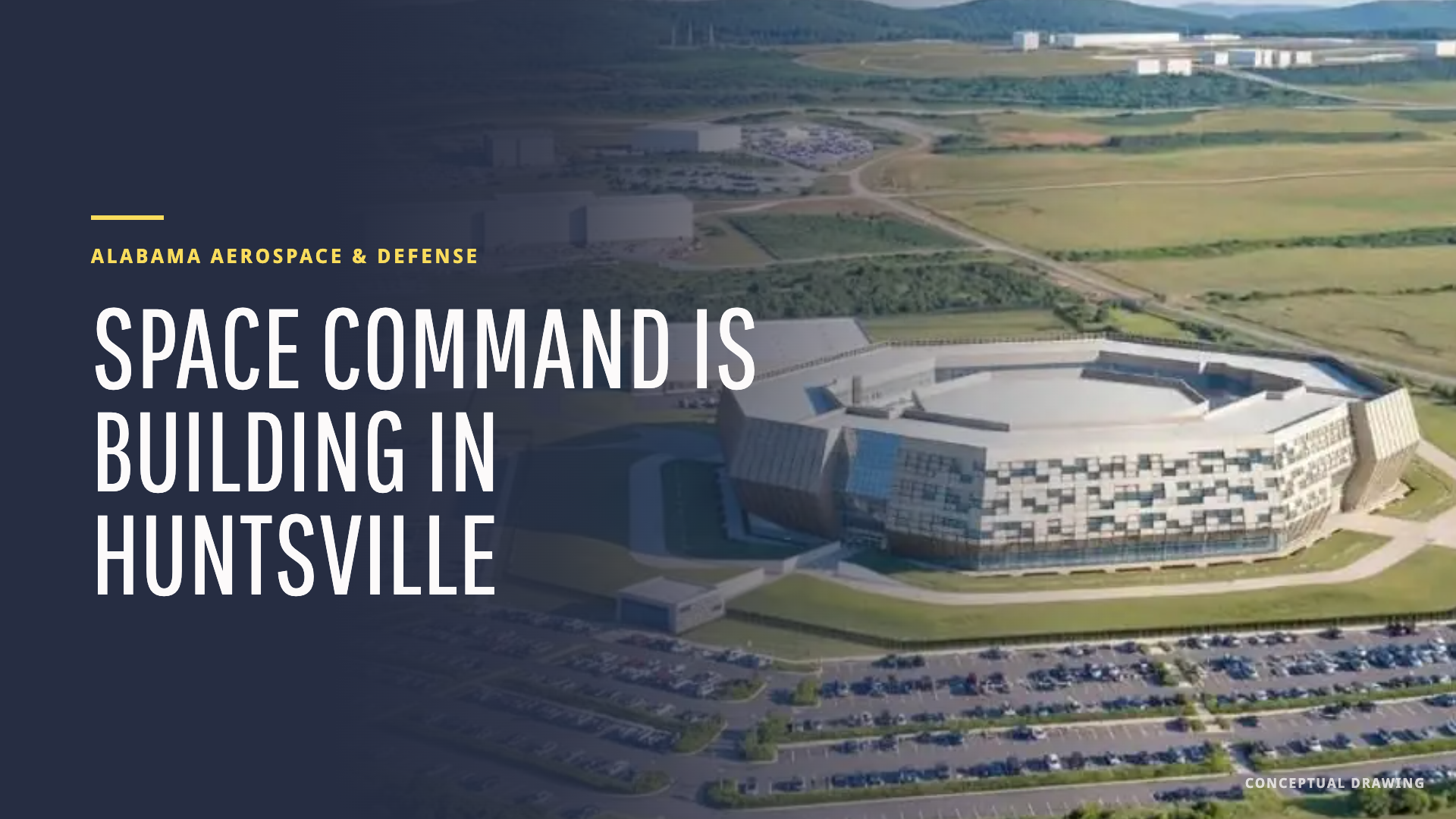
Huntsville just marked one year as the permanent home of U.S. Space Command. Most of the coverage has focused on the mission and the move. For manufacturers in Alabama, the more useful story is what this kind of growth does to the industrial base around it.
Here is what happened, why it matters if you make things for a living, and how to get ahead of it.
Space Command by the numbers
More than 140 personnel are already working at Redstone Arsenal. Gen. Stephen Whiting, who leads Space Command, says the command is on track for about 200 by the end of 2026, and roughly half its total staff based in North Alabama by 2028.
That is a fast ramp for an organization this size. And it is happening on top of an already dense aerospace and defense presence that includes NASA's Marshall Space Flight Center, the Missile Defense Agency, and Army Materiel Command.
The number manufacturers should actually watch
Space Command is the newest anchor, not the whole story.
Since 2015, aerospace, defense, and aviation companies have announced $4.3 billion in new investment in Alabama and more than 15,000 new jobs. That is a decade of compounding growth. Space Command adds to it rather than starting it.
Investment at that scale does not stay inside a few campuses. It moves down the supply chain.
What regional growth does to a plant floor
When a region attracts this much defense and aerospace activity, three things tend to follow for the manufacturers who supply it.
Demand goes up. More programs and more primes mean more parts, more assemblies, and more suppliers competing to make them.
Standards go up. Defense and aerospace work carries tight tolerances, documentation requirements, and traceability that a lot of shops are not set up for yet.
Labor gets tighter. A growing region pulls skilled workers toward the biggest employers, which makes hiring harder for everyone else.
Each of these pushes in the same direction. Manufacturers have to do more, to a higher standard, often with fewer people.
Where automation fits
This is the point where automation stops being optional and starts being the way you keep up. A few examples of where it shows up when a shop scales to meet defense-grade demand:
-
Robotics handle repetitive, high-volume tasks like machine tending, welding, and palletizing, which frees skilled people for the work that actually needs them.
-
Machine vision inspects parts for defects and verifies measurements at speed, which supports the traceability and quality documentation these programs require.
-
Safety systems let people and automation share the floor without slowing production or creating risk.
-
Sensors and industrial networking collect the data that proves a process is in control, which is often a requirement rather than a nice to have in this kind of work.
-
None of this is about replacing people. It is about giving a growing plant the capacity and the consistency to take on work it could not handle before.
How to get ahead of it
The manufacturers who benefit most from a regional boom are usually the ones who prepared before the demand arrived, not after.
That is the reason we built TechFest Alabama. It is a place for the engineers, technicians, and plant leaders who make things in this state to see real applications, learn from each other, and figure out what automation actually fits their floor. As North Alabama grows, that conversation only gets more important.
Frequently asked questions
How many Space Command personnel will be in Alabama?
More than 140 are already working at Redstone Arsenal, with about 200 expected by the end of 2026 and roughly half the command's total staff based in North Alabama by 2028.
Why does Space Command matter for manufacturers?
It adds to a decade of aerospace and defense growth in Alabama, which drives demand, raises quality and traceability standards, and tightens the skilled labor market for the manufacturers who supply that ecosystem.
How much has Alabama's aerospace and defense sector grown?
Since 2015, companies in aerospace, defense, and aviation have announced $4.3 billion in new investment in the state and more than 15,000 new jobs.
What can manufacturers do to prepare?
Invest early in the automation and processes that support higher volume and tighter quality requirements, and build the workforce and know-how to run them. Events like TechFest Alabama exist to help with exactly that.
Ready to talk it through?
If you are thinking about how to scale your operation for what is coming, talk with an application engineer. We will help you figure out where automation fits, and where it does not.
Learn more about TechFest Alabama.
